
Last updated October 15, 2026
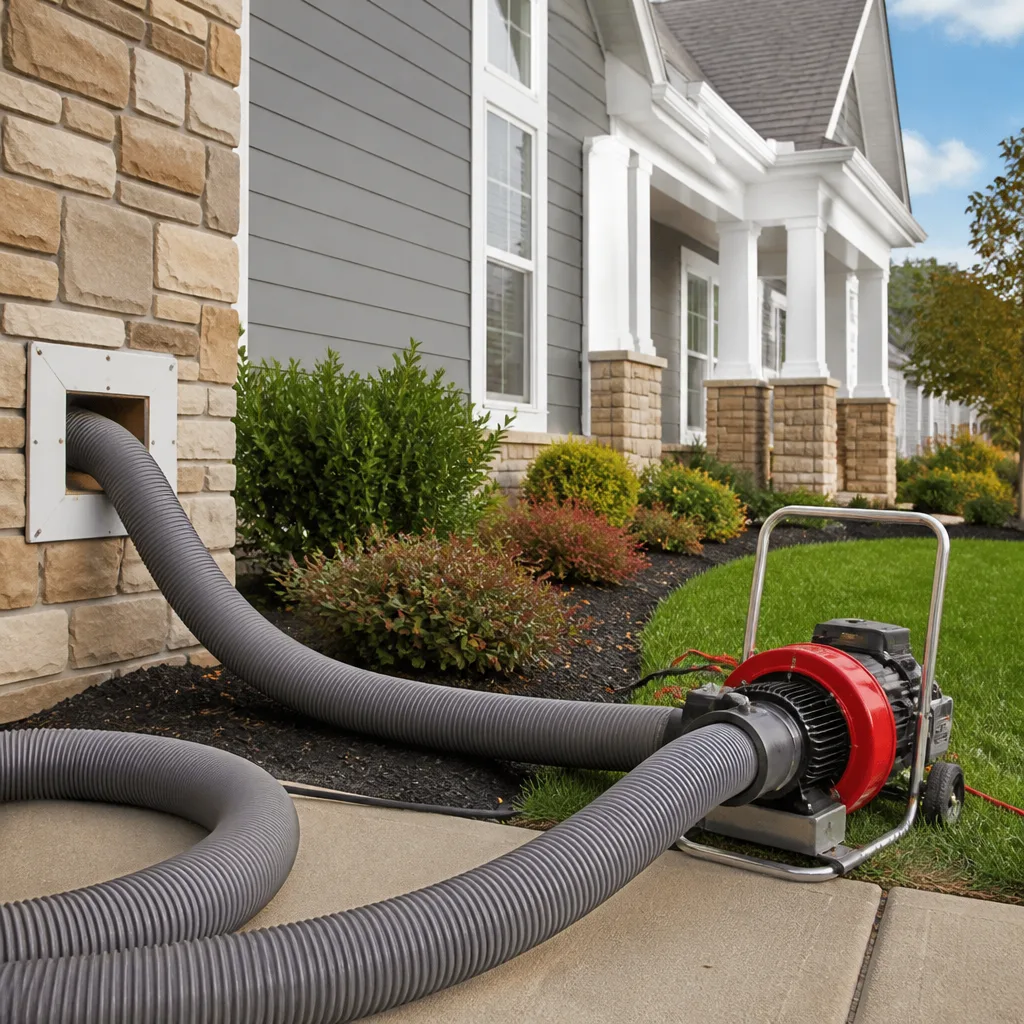 Whole-home duct cleaning
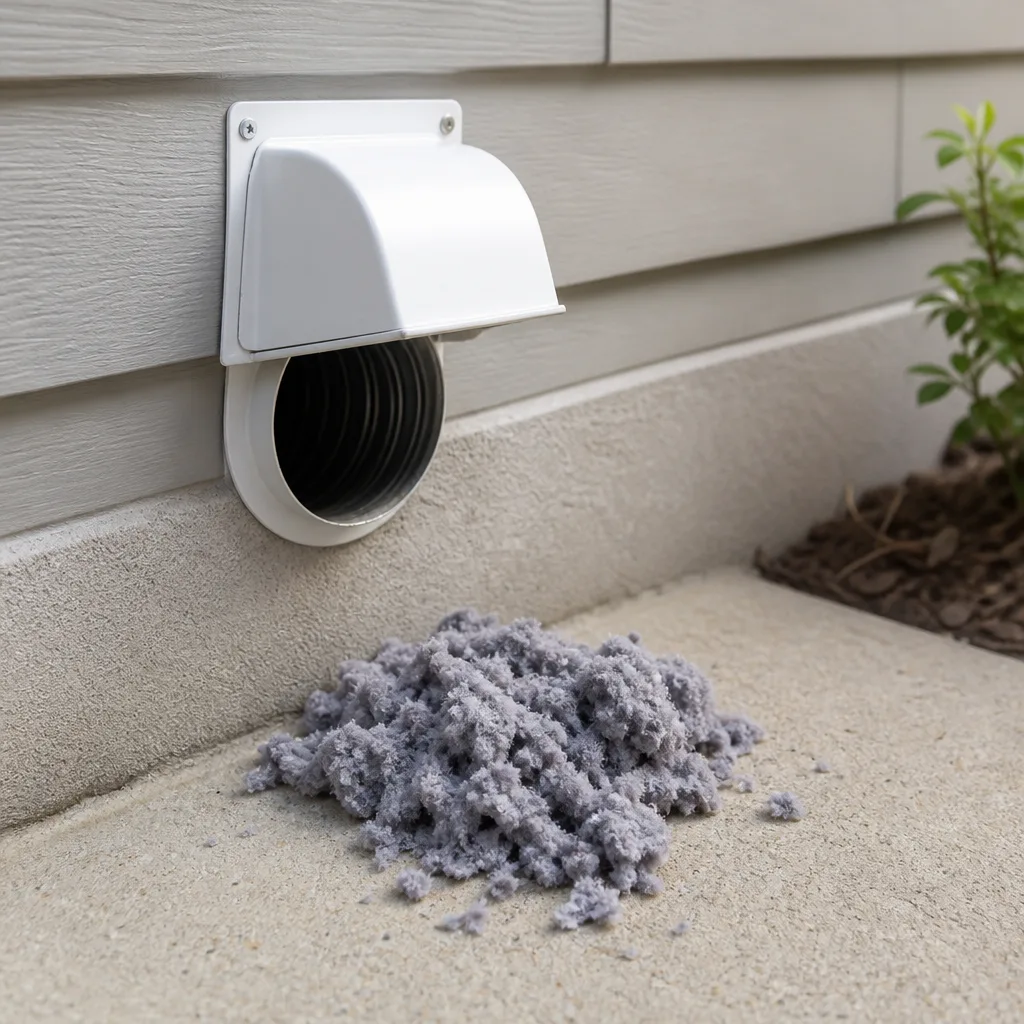 Dryer vent cleaning
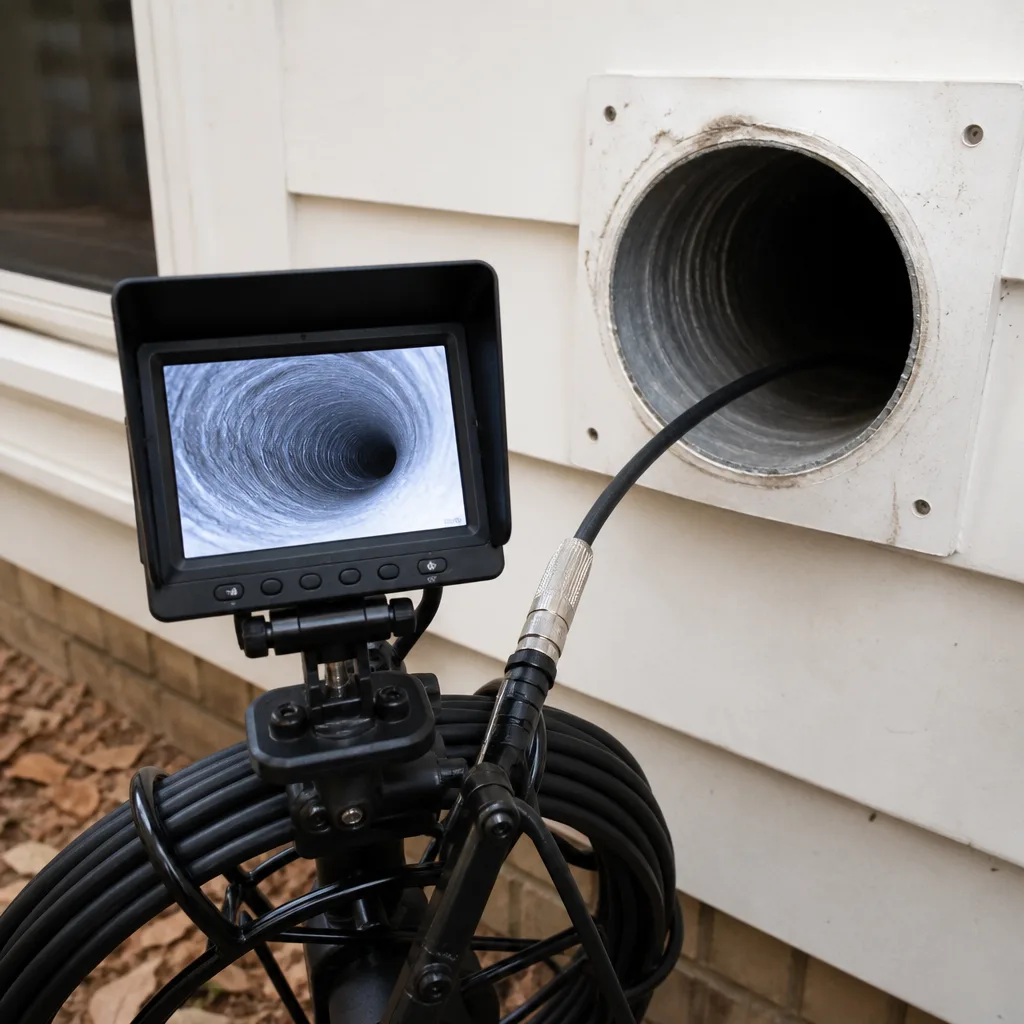 Camera inspection
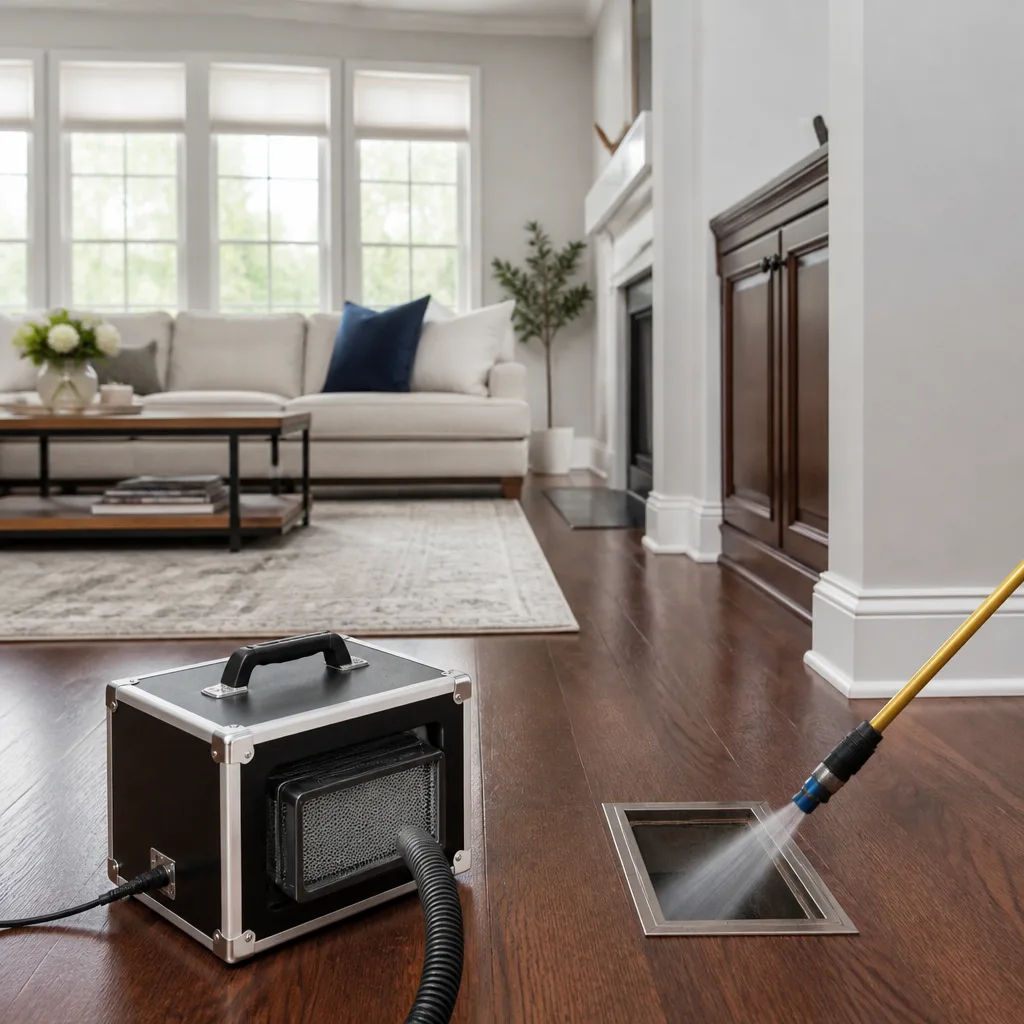 Sanitizing & deodorizing
Whole-system duct and dryer vent check with before-and-after photos - you see exactly what came out of your vents
That "$99 whole-house special" is a bait ad - the real number appears once they are in your hallway, or the "clean" is a shop-vac at the register. We photograph the inside of your ducts before and after instead.
DIY vs Professional Air Duct Cleaning: The Orlando Homeowner’s Decision Guide
Here’s the counterintuitive reality most DIY duct cleaning guides won’t tell you: about 70% of your ductwork is physically unreachable with any tool you can rent or buy at a big-box store. You can clean the first few feet of register boots and wipe down vent covers, but the main trunk lines and return plenums that actually move air through your home will remain untouched. That means the debris you’re trying to remove stays exactly where it is, while the small amount you do disturb gets loosened and pushed back into your living space. This guide tells you precisely when DIY makes sense for an Orlando homeowner, when it doesn’t, and how to avoid spending money on a rental that leaves you worse off than when you started. For related reading, see our How to Hire a Air Duct Cleaning Contractor in Orlando: A Step-by-Step Guide.
Quick Answer
DIY air duct cleaning is genuinely adequate for three narrow tasks: wiping down registers and vent covers, cleaning the first few inches of visible ductwork, and basic dryer vent maintenance when the exterior vent is under 8 feet and easily reachable. A full-system Air Duct Cleaning is the right call when you have visible mold, rodent activity, recent construction dust, or a home older than 5 years that has never had the ducts cleaned. In Orlando’s humid climate, the biggest variable isn’t cost, it’s containment: professional negative-pressure equipment pulls loosened debris out of your house, while a shop vac and brush push much of it into the air you breathe, which is a real health and air quality problem in a city where biological growth in ducts is common.
Styles & brands we work with
Table of Contents
- When DIY Duct Cleaning Actually Makes Sense
- The Containment Problem: Why a Shop Vac Isn’t Enough
- The Orlando Humidity Factor: Mold Risk in Flex Duct
- DIY vs Professional: A Real Cost Comparison
- The Hybrid Approach: DIY Maintenance Between Professional Cleans
- What a Professional Duct Cleaning Actually Includes
- Common Mistakes to Avoid
- When to Call a Professional
When DIY Duct Cleaning Actually Makes Sense
We’re not here to tell you that every duct cleaning job requires a professional. That’s simply not true, and saying it would be dishonest. There are three specific scenarios where grabbing a damp cloth, a vacuum with a crevice tool, and maybe a Dryer Vent Cleaning Maintenance Checklist for Orlando Homeowners brush kit is a perfectly reasonable use of your Saturday morning.
1. Register and Vent Cover Maintenance
Your registers, the metal or plastic grilles where conditioned air enters each room, collect dust, pet hair, and the occasional spider web. This is surface-level housekeeping, and there’s no reason to pay anyone to do it. Turn off the HVAC system, remove each register, vacuum it thoroughly, and wipe it with a damp microfiber cloth. While the register is off, stick your vacuum hose an inch or two into the boot, the short metal box that connects the register to the duct, and clean what you can see. This is about as far as DIY access reasonably goes, and for routine maintenance, it’s genuinely helpful.
2. Accessible Dryer Vent Cleaning Under 8 Feet
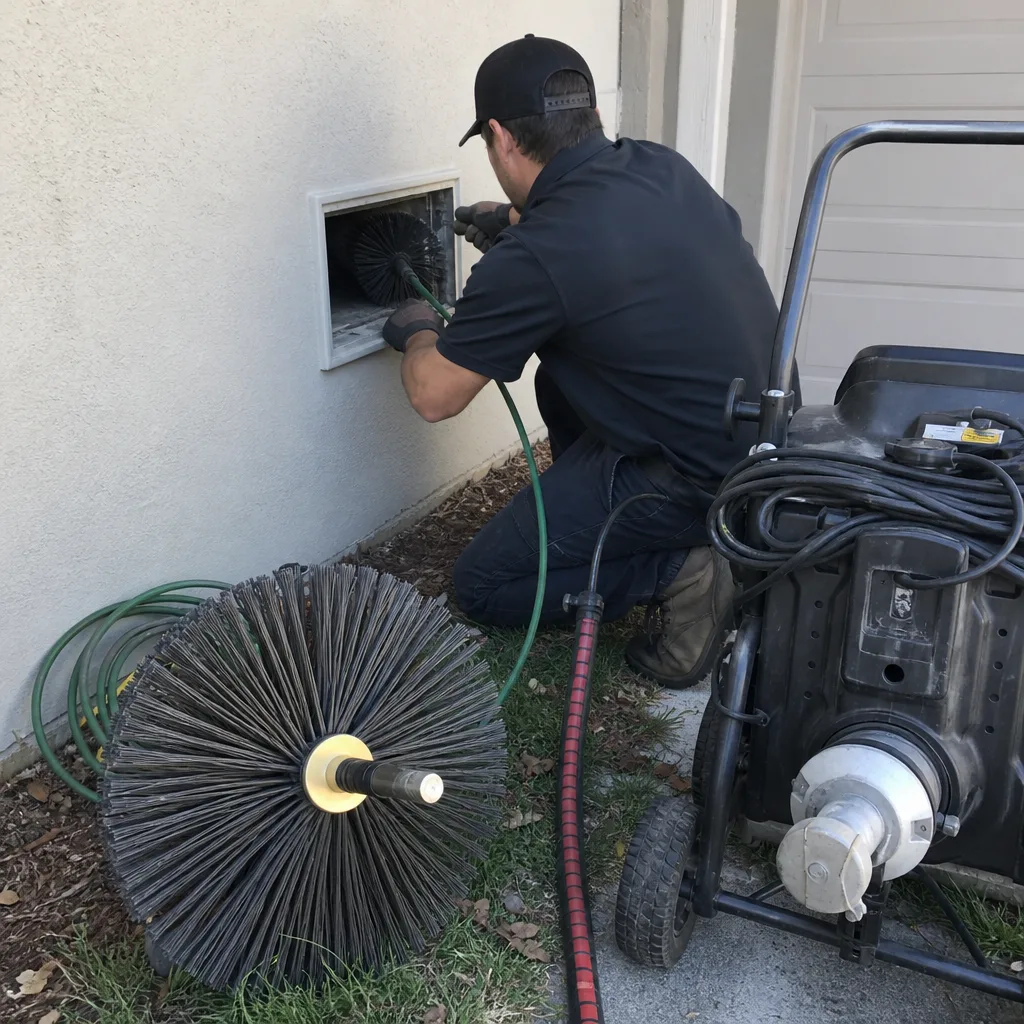
If your dryer vents directly through an exterior wall and the total duct run is under 8 feet, a DIY dryer vent cleaning is feasible. This is especially common in smaller Orlando homes built in the 1970s and 1980s, where laundry rooms sit along exterior walls. You’ll need a dryer vent brush kit, which typically includes flexible rods and a brush head, plus a drill to spin the brush. The key is to work from both ends: detach the duct behind the dryer and clean from inside, then remove the exterior vent cover and clean from outside. For anything longer than 8 feet, or any duct that makes turns you can’t visually confirm, you’re working blind, which means you won’t know if you actually cleared the clog. That’s the point where a professional-grade rotary brush system becomes necessary. For a deeper guide on this specific service, see our Dryer Vent Cleaning in Orlando page.
3. Pre-Move-In Dust Removal in a Visibly Clean System
If you’re moving into a newer Orlando home, or a home where the previous owner maintained the HVAC system well, and your only concern is the light dust you can see at the register openings, a DIY dust pass is reasonable. This is especially common in Dr. Phillips and Winter Park neighborhoods where homes change hands frequently and vacant periods let dust settle. But here’s the honest caveat: in our experience visiting hundreds of Orlando homes, what you can see at the register opening tells you almost nothing about what’s inside the duct trunk. A register can look clean while the main return drop is lined with a decade of construction dust, pet dander, and whatever else the system has been circulating. If the home has a documented cleaning history and the system is newer, DIY is fine. If you’re unsure, a professional inspection with camera documentation gives you a factual answer instead of a guess.
The Containment Problem: Why a Shop Vac Isn’t Enough
This is the single most important concept in this entire guide, and it’s the one virtually every DIY article skips. The difference between professional duct cleaning and DIY duct cleaning is not primarily about brushes, agitation, or effort. It’s about air pressure. Specifically, whether the loosened debris flows toward a filtered collection point outside your living space, or gets blown back into the rooms where your family breathes.
Professional duct cleaners use what’s called negative air pressure containment. A machine, commonly a Nikro or Abatement Technologies unit in professional fleets, creates a powerful vacuum on the duct system that pulls air from the house into the ducts and toward a HEPA-filtered collection chamber. The machine keeps the system under continuous negative pressure while agitation tools knock debris off duct walls. Because the duct is under negative pressure, the debris has one place to go: into the collection chamber. It cannot escape into your living room because the airflow is working against it.
A shop vac does the opposite. You’re pushing a hose into a duct and creating localized suction, but the duct system itself remains at normal or positive pressure relative to your living space. Every joint, every crack, every register opening is an escape route. When your brush knocks a layer of dust off the duct wall, a meaningful percentage of that dust takes the path of least resistance, which is out of the duct and into your home. You’re not removing debris as much as you’re redistributing it. In a dry, dusty duct, that’s annoying. In an Orlando duct with any degree of biological growth, which we’ll cover next, that’s potentially a health problem.
This is why the tool itself isn’t the deciding factor. You can buy a consumer brush kit and spend an entire weekend working register by register, and the fundamental physics still work against you. Without the ability to seal off sections and hold the whole system under negative pressure, the work is incomplete by design.
The Orlando Humidity Factor: Mold Risk in Flex Duct
Orlando’s climate changes the DIY calculus in a way a guide written for a Phoenix or Denver homeowner cannot account for. Relative humidity in Orlando sits above 70% for much of the year, and the dew point routinely stays in the mid-70s. Your air conditioning system is fighting that humidity constantly, and the inside of your ductwork is a place where moisture condenses, especially in flex duct runs through unconditioned attics.
Those attic temperatures in July regularly exceed 120 degrees in neighborhoods like Conway, MetroWest, and Lake Nona. When cool air moves through a flex duct in a 120-degree attic, the temperature differential creates condensation on the inside of the duct. That moisture, combined with the organic dust that accumulates in any duct system, creates exactly the conditions where mold and mildew colonize. This is not a rare occurrence in Orlando – it’s a persistent characteristic of the housing stock, especially in homes built before modern attic ventilation standards.
Here’s the risk calculus that matters for the DIY decision. In a dry climate, vacuuming a moldy duct stirs up dust and some spores, and the dry air helps them settle out relatively quickly. In Orlando, that same disturbance releases spores into an environment where the indoor humidity is already elevated. You’ve just aerosolized a biological contaminant into air that’s warm and moist enough for that contaminant to establish itself elsewhere: on drywall, on carpet, on upholstery, in your HVAC coil. The DIY project intended to improve your air quality can actively seed a broader problem throughout the home.
This is a case where the honest professional recommendation is to not do it yourself. If you see visible mold at your register openings, if you smell a persistent musty odor when the AC runs, or if you’ve had water intrusion in the duct area – a leaky roof, a condensate overflow, a bathroom fan vented into the attic rather than outside – the correct step is professional assessment and remediation with proper containment, not a weekend with a rented vacuum. The equipment brands matter here: a professional setup from Abatement Technologies is designed specifically to create negative pressure containment in these situations, so the mold is extracted into a HEPA filter rather than circulated through your living space.
DIY vs Professional: A Real Cost Comparison
Let’s talk about money honestly, because the DIY decision is usually framed as a money decision. Here’s what each path actually costs in the Orlando market, both in dollars and in what those dollars buy you.
The DIY Path: What You’ll Actually Spend
- Rental equipment: A consumer-grade air duct cleaning machine typically rents for $40 to $75 per day at Orlando equipment rental locations. These are smaller versions of professional machines with significantly less suction power and no HEPA filtration in most cases.
- Consumables: Brushes, cleaning solution, disposable gloves, and dust masks: $25 to $60 depending on what you already own.
- Time: A first-time DIYer cleaning what’s actually reachable, which is registers, boots, and the dryer vent, should budget 4 to 6 hours. That’s the honest estimate for a 2,000-square-foot home.
- Risk exposure: Not a line item on a receipt, but real. The cost of incomplete cleaning, the cost of redistributed dust, the cost of disturbing mold without containment.
- Total: Roughly $65 to $135 out of pocket, plus most of a day, plus whatever the risk exposure ends up being worth.
The Professional Path: What You’re Actually Buying
A professional whole-system air duct cleaning for a typical Orlando home, meaning roughly 1,800 to 2,500 square feet with 8 to 14 supply ducts and a central return, runs $350 to $650 depending on the system’s size, accessibility, and condition. That’s the honest range for a reputable Orlando company using professional-grade equipment.
- Equipment: A Rotobrush rotary brush system for mechanical agitation inside the ducts, paired with a Nikro HEPA vacuum for negative-pressure extraction. These are commercial machines designed for this exact job.
- Containment: The negative air pressure setup we described earlier, which keeps loosened debris moving toward collection rather than into your living space.
- Time: A professional crew typically completes a standard system in 2 to 4 hours, and the homeowner’s time commitment is near zero.
- Documentation: Before-and-after photos of the actual ductwork, so you can see what was removed and verify the work happened. This is part of the Relay Standard booking experience.
- Guarantee: A written warranty on the work, backed by a real promise. At Cardinal Air Duct Orlando, the 365-Day Done Right Promise means if the work isn’t done right within a full year, we return and correct it at no charge. No DIY rental offers that.
The cost conversation is really about what you’re comparing. A $100 DIY weekend buys you surface-level cleaning of the parts you can reach. A $400 to $600 professional clean buys you whole-system cleaning with containment, documentation, and a guarantee. For a deeper breakdown of professional pricing and what’s included, see our Air Duct Cleaning in Orlando page.
The Hybrid Approach: DIY Maintenance Between Professional Cleans
Here’s the model we actually recommend to most Orlando homeowners, because it’s honest and it matches how your house actually works. It combines the low cost of DIY maintenance with the real cleaning power of professional equipment on a sensible schedule.
- Every 3 months: DIY register cleaning. Remove each register, vacuum it, wipe it down, and vacuum the visible boot. This takes 30 to 45 minutes and keeps surface dust from accumulating and re-entering your air stream.
- Every 6 months: Replace your HVAC filter, and check the dryer vent exterior opening for lint buildup. If you can reach the exterior vent cap safely, remove it and clean the visible lint screen. This is a 15-minute task.
- Every 3 to 5 years: Professional whole-system cleaning. This is the interval that matches how quickly real duct contamination accumulates in Orlando’s climate, with its combination of humidity, pollen, and constant AC usage. Homes with pets, recent renovations, or allergy-sensitive occupants may want to shorten this to every 2 to 3 years.
This hybrid model gets you the best of both worlds. The DIY maintenance keeps the visible parts of the system presentable and extends the interval between professional visits. The professional clean reaches the 70% of the ductwork you cannot access, applies true negative-pressure containment, and resets the system to a known clean baseline. The professional visit also includes HVAC coil cleaning, which materially improves system efficiency and is not something any DIY tool can address. See our HVAC Cleaning in Orlando page for more on what coil cleaning involves and why it matters for your electric bill.
What a Professional Duct Cleaning Actually Includes
When you hire a professional for whole-system air duct cleaning in Orlando, you should know exactly what the service entails, so you can evaluate whether you’re getting a real cleaning or a surface wipe-down with a truck-mounted shop vac. The difference is material.
A legitimate professional cleaning includes:
- System inspection with camera documentation: Before any cleaning starts, the technician should inspect the main trunk lines, return plenum, and supply branches with a camera, documenting what’s actually in there: dust accumulation, debris, mold indicators, and any structural damage to ducts or connections. This is your baseline.
- Register and grille removal: All supply registers and return grilles are removed and cleaned or replaced if damaged.
- Mechanical agitation of duct walls: A rotary brush system, such as the Rotobrush units used in professional fleets, spins inside the ducts to physically dislodge debris that’s adhered to the walls. This is the step that separates a real cleaning from a vacuum-only pass, which leaves adhered debris in place.
- Negative-pressure extraction: Simultaneously, a HEPA-filtered vacuum unit, such as a Nikro system, maintains the ductwork under negative air pressure, pulling loosened debris toward collection and away from your living space. This is the containment step we discussed earlier, and it’s the single biggest differentiator between professional and DIY work.
- Access points and sealing: Depending on the system layout, the technician cuts small access ports at strategic points in the trunk line, cleans through those ports, then properly seals them after the work is complete. This is how professionals reach the interior sections that a register-first approach cannot.
- Coil and blower cleaning: The full HVAC system includes the evaporator coil and blower motor, which collect dust and biological growth over time. Cleaning the ducts without cleaning the coil means you start re-contaminating clean ducts on day one. This is part of a complete HVAC Cleaning in Orlando service.
- Final inspection: After cleaning, the technician documents the results with photos of the same locations photographed before cleaning. You see the difference. This before-and-after documentation is a core part of how we operate, and it’s included in every Cardinal Air Duct Orlando job as part of The Relay Standard booking experience.
If a company’s entire process is connecting a vacuum to one register and running it for 45 minutes, that’s not whole-system cleaning regardless of what they charge. The equipment brands should be visible and identified on the truck. A professional Orlando duct cleaner arrives with Rotobrush, Nikro, or Abatement Technologies equipment, not a rented carpet cleaner and a leaf blower.
Common Mistakes to Avoid
- Assuming a clean register means clean ducts. The visible part of your system is the tip of the iceberg. Orlando systems with high AC runtime accumulate contamination inside the trunk lines where you cannot see it, and a clean register tells you nothing about what’s behind it.
- Using a shop vac as a duct cleaner without containment. This is the most common DIY error we see, and it’s actively counterproductive. The vacuum creates localized suction while the rest of the system leaks loosened dust into your living space. You’re moving the problem, not removing it.
- Attempting to clean visible mold yourself. In a humid climate like Orlando, disturbing mold in ducts without negative-pressure containment spreads spores throughout your home. What started as a contained problem in a duct run becomes a property-wide issue. This is a job for professional equipment and training, period.
- Paying for a “whole-house special” that takes 45 minutes. A real whole-system cleaning on a typical Orlando home takes 2 to 4 hours with professional equipment. A 45-minute job is a register wipe-down with a vacuum, and it doesn’t matter what they charge.
- Skipping the coil when you clean the ducts. The evaporator coil sits in the air stream and accumulates the same debris as the ducts. Clean ducts on a dirty coil means the first AC cycle re-contaminates your new clean ducts. The coil is part of a complete system clean.
- Falling for a low per-vent teaser price. Bait-and-switch pricing is endemic in this industry. A company quotes a per-vent price that seems cheap, then the invoice balloons once the technician is in the house with a list of add-ons. The honest model is a written whole-system price agreed before work starts, which is exactly how Cardinal Air Duct Orlando operates.
- Going years between even basic filter changes. Your HVAC filter is the first line of defense for the whole system. A clogged filter forces air around the edges, meaning unfiltered air moves through the system and accelerates duct contamination. In Orlando, with year-round AC usage, change that filter every 60 to 90 days.
When to Call a Professional
The short version: if you can see mold, smell mustiness when the AC runs, have had rodents in the attic, completed a renovation, or have owned the home for years without a duct cleaning, the DIY calculus has already shifted. These situations require negative-pressure containment, mechanical agitation, and documentation that only professional equipment provides. If your system is less than 5 years old, the registers are the only visible dust, and you’re diligent about filter changes, DIY maintenance under the hybrid model is reasonable until your next professional cleaning comes due. Cardinal Air Duct Orlando offers free estimates in Orlando – call (850) 750-6095 if you’re unsure which side of the line you’re on.
See the difference
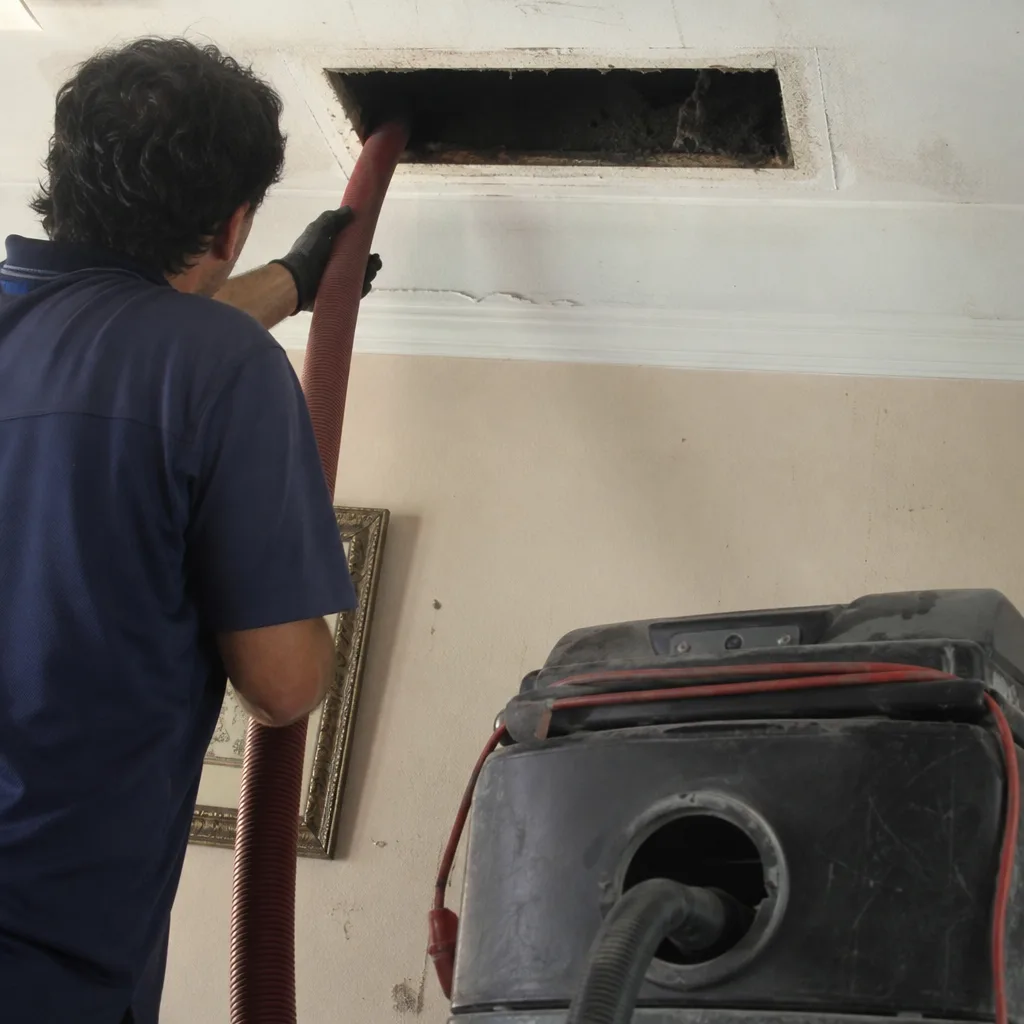 Before
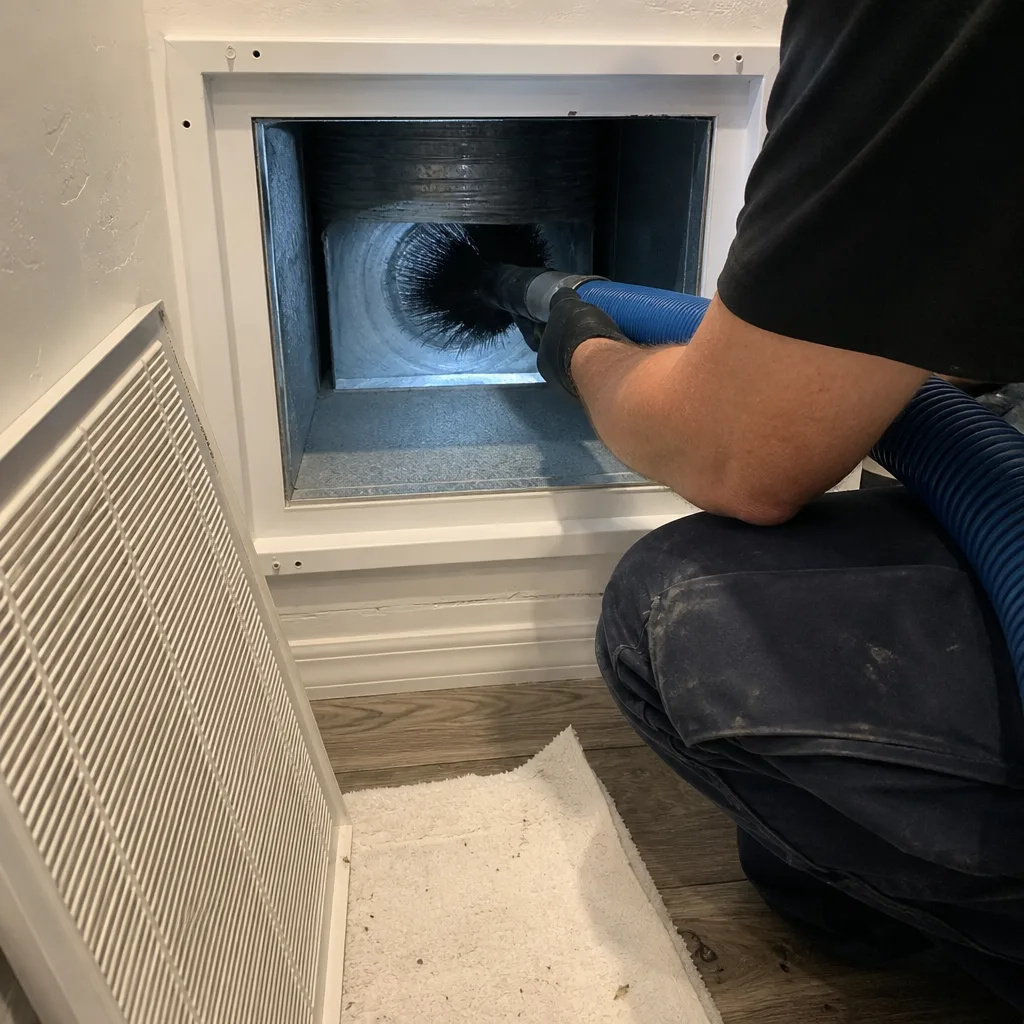 After
After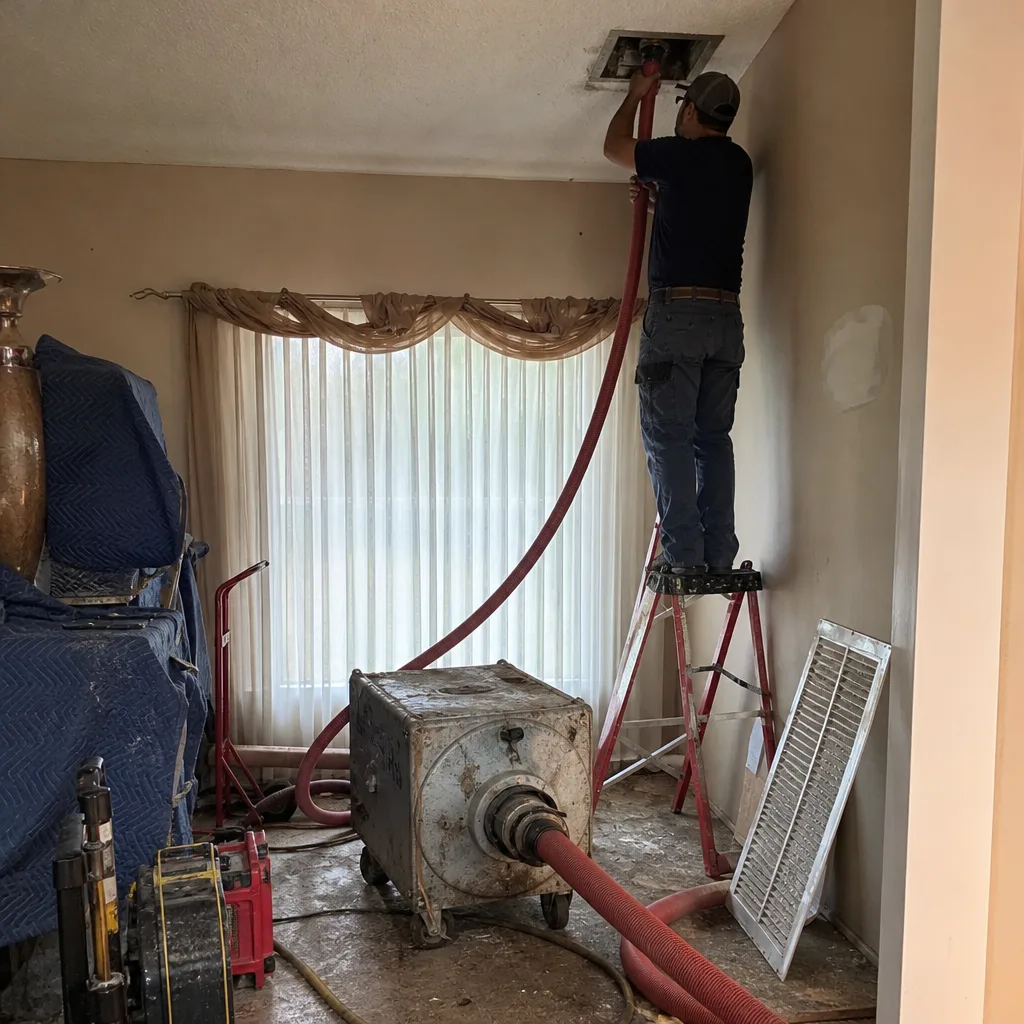 Before
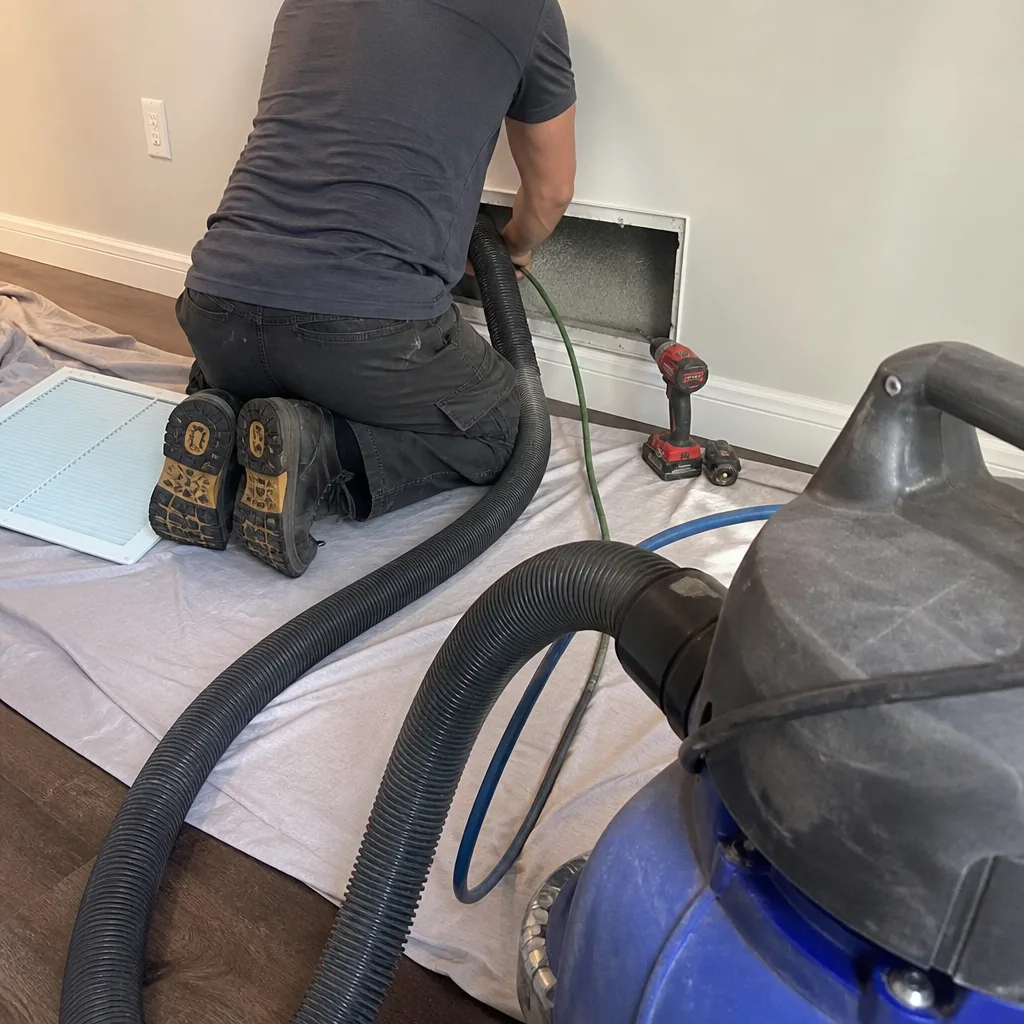 After
After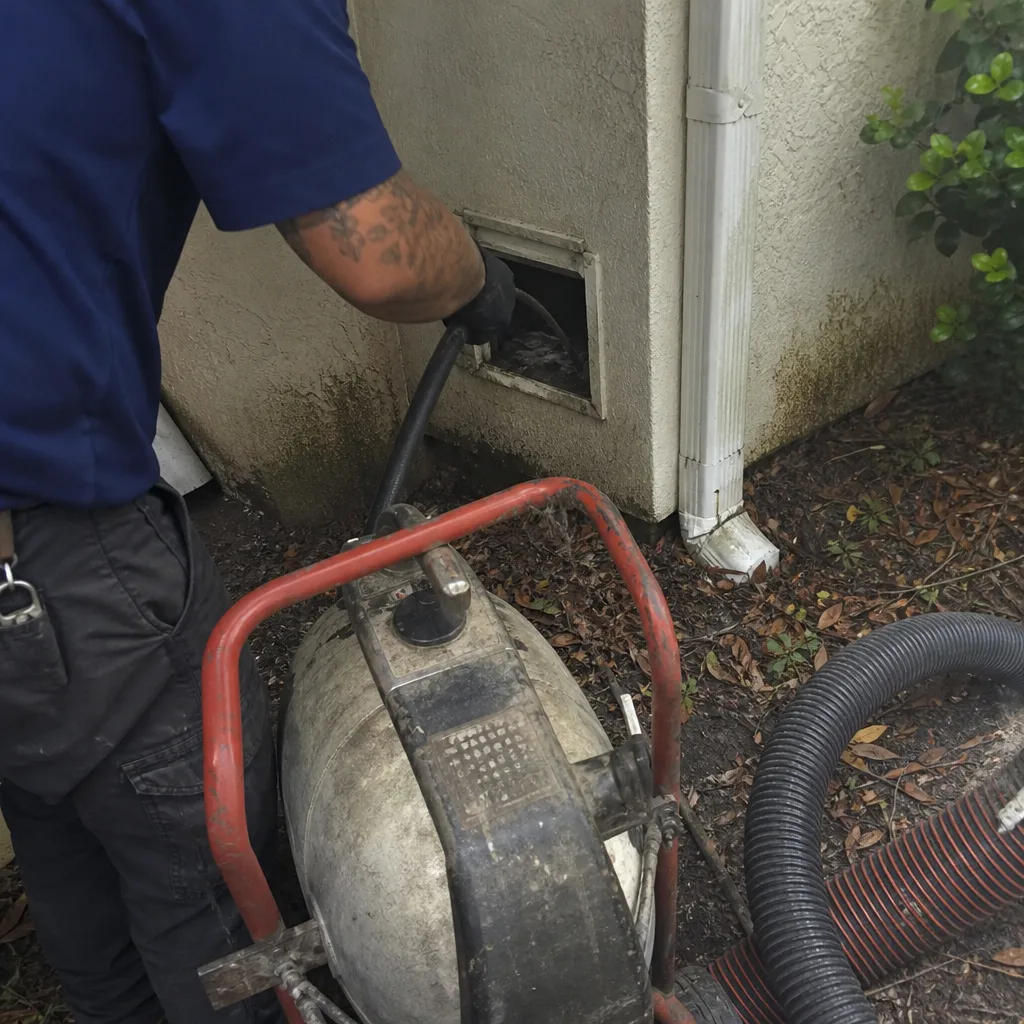 Before
 After
AfterFrequently Asked Questions
For a typical Orlando home between 1,800 and 2,500 square feet, professional air duct cleaning runs $350 to $650 depending on system size, accessibility, and condition. This includes whole-system cleaning with negative-pressure containment, not a register wipe-down, and should be provided as a written price before any work starts.
DIY duct cleaning is worth it only for the tasks it can actually accomplish: register and vent cover cleaning, visible boot vacuuming, and accessible dryer vent maintenance. For the interior of the duct system, where most contamination lives, DIY tools cannot reach far enough or provide the containment needed to remove debris without redistributing it. For most Orlando homeowners, the hybrid model we described above provides the best value.
A cheap quote usually means a shorter process with less equipment: no negative-pressure containment, no mechanical agitation, no coil cleaning, and no before-and-after documentation. A legitimate whole-system cleaning on a typical Orlando home takes 2 to 4 hours with professional equipment. If a quote seems impossibly low, it’s because the company is planning to do a fraction of the work, often with a bait-and-switch invoice after the fact. Call (850) 750-6095 for an honest written quote on a complete job.
Before-and-after photo documentation is the standard. A professional company photographs the inside of your trunk lines before cleaning and the same locations after, so you can see the difference with your own eyes. This is part of the Relay Standard at Cardinal Air Duct Orlando: every job includes photo proof and a digital invoice payable by link, so you’re never taking anyone’s word for it.
In Orlando’s humidity, with near-year-round AC usage, most homes benefit from a professional whole-system cleaning every 3 to 5 years. Homes with pets, smokers, recent water intrusion, or allergy-sensitive occupants may need it every 2 to 3 years. Between those visits, quarterly register cleaning and regular filter changes extend the interval.
Dirty ducts can absolutely affect health, particularly in Orlando where humidity promotes biological growth. Dust, pollen, pet dander, and mold spores in your ducts get circulated through your living space every time the air conditioner runs, which is most of the year here. For allergy sufferers, asthma, and anyone with respiratory sensitivity, clean ducts and a clean coil are part of the environmental management plan, not an optional luxury.
The Bottom Line
The DIY vs. professional duct cleaning decision is not really about cost, and it’s not about effort. For more guides & resources on maintaining your Orlando home’s air quality, explore our blog. It’s about what you can physically reach and whether you can contain what you disturb. DIY is genuinely adequate for register maintenance, visible boot cleaning, and short, accessible dryer vents. Professional cleaning is the correct call for whole-system contamination, visible mold, post-renovation dust, and any Orlando home that hasn’t had a professional cleaning in years. The smart long-term model is the hybrid approach: quarterly DIY register care, filter changes every 60 to 90 days, and a professional whole-system clean every 3 to 5 years. That’s the schedule that keeps Orlando air quality high without overpaying for services you don’t need or underpaying for services that don’t work.
Written by Omar Haddad, Owner at Cardinal Air Duct Orlando, serving Orlando since 2005.